
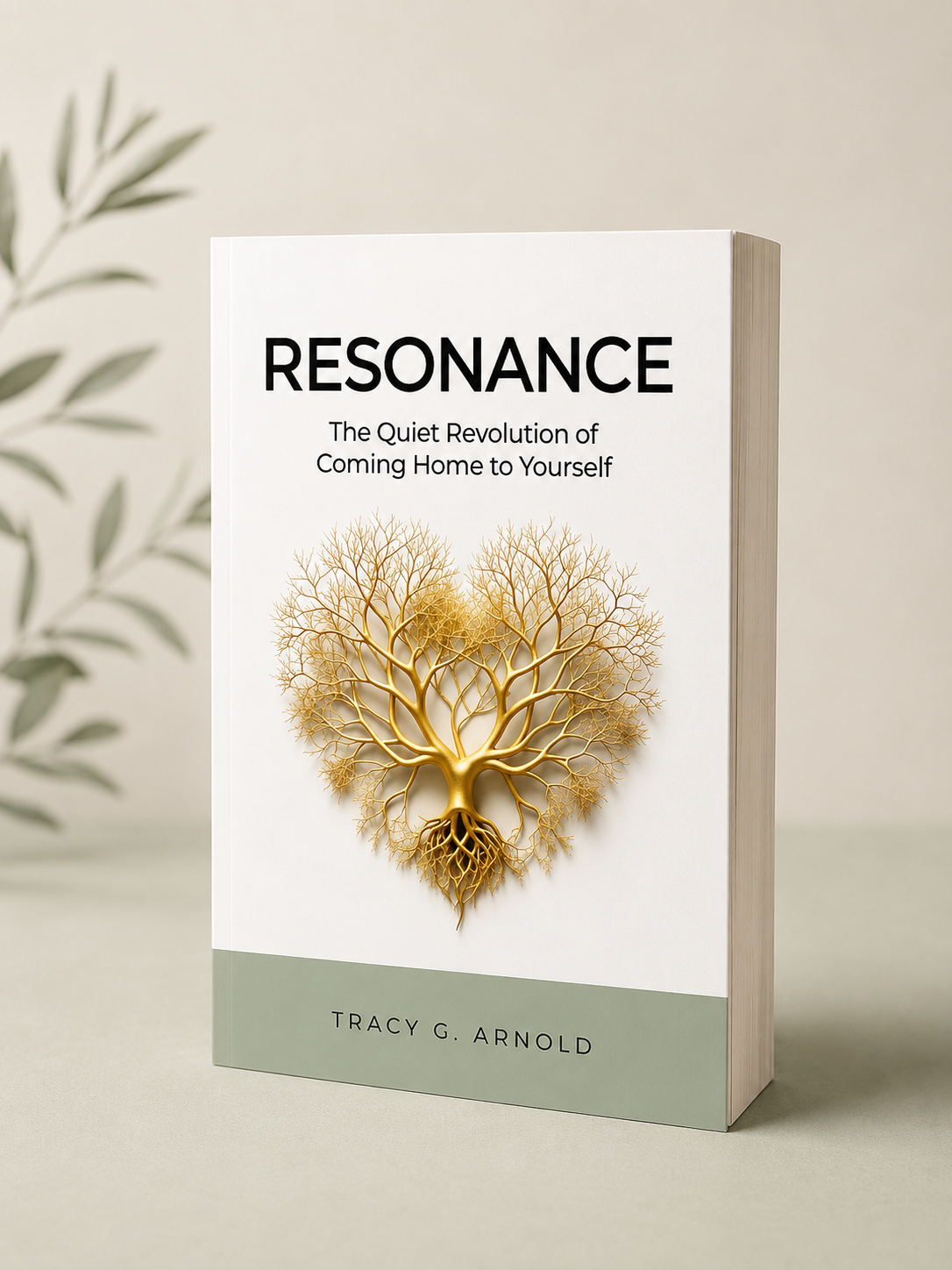
If you’ve ever understood what needs to change—but still found yourself repeating the same patterns—Resonance was written for you.
Part memoir and part embodied guide, this book explores the connection between the nervous system, emotional conditioning, stress, and the ways we learn to disconnect from ourselves over time.
Through personal story and practical reflection, Tracy Arnold offers a grounded approach to understanding why change can feel difficult—even when we deeply want it.
Inside you’ll explore:
- Nervous system patterns and emotional conditioning
- The relationship between stress, the body, and behavior
- Why insight alone often isn’t enough to create lasting change
- Simple practices for becoming more grounded and self-aware
- What it means to come home to yourself
This is not a book about becoming someone new.
It is about returning to the parts of yourself that were always there.
Early Reader Review –
This book felt like someone finally describing what it’s like to know exactly why you’re struggling… and still not be able to change it.
I’ve read so many books about healing, mindset, nervous systems, trauma, habits—all of it. I could explain my patterns. I understood where they came from. But I still felt stuck in the same reactions, the same exhaustion, the same feeling of being disconnected from myself.
Resonance was the first book that made me realize maybe the problem wasn’t that I didn’t understand enough. Maybe I just didn’t know how to stay with myself long enough for anything to actually change.
What hit me hardest was how human the book feels. Tracy doesn’t write like someone who figured everything out and came back to teach the rest of us. She writes like someone who lived it. There were so many moments that felt painfully familiar:
agreeing when another part of you pulls back,
feeling relief when plans are canceled,
being good at taking care of everyone else while feeling absent from yourself,
replaying conversations afterward,
feeling like your body is braced even when nothing is wrong.
The biggest shift for me was the way the book reframed healing. I didn’t realize how much I had been treating myself like a problem to solve. The idea that my nervous system wasn’t failing me—but protecting me—completely changed how I saw myself.
And the book doesn’t just say “stay with yourself” in a performative wellness way. It explains why that’s hard. It explains why we leave ourselves in the first place. The newer insight around softening really lands:
healing isn’t forcing yourself to endure discomfort—it’s creating enough safety inside yourself that you no longer need to run from it.
That changed how I read the entire book.
I also appreciated that it didn’t pretend healing makes life easy. The ending felt honest:
the patterns still exist sometimes, but they no longer run everything unconsciously. That felt real to me.
This isn’t a book that gives you ten steps to become a better person.
It’s a book that makes you feel less alone inside yourself.